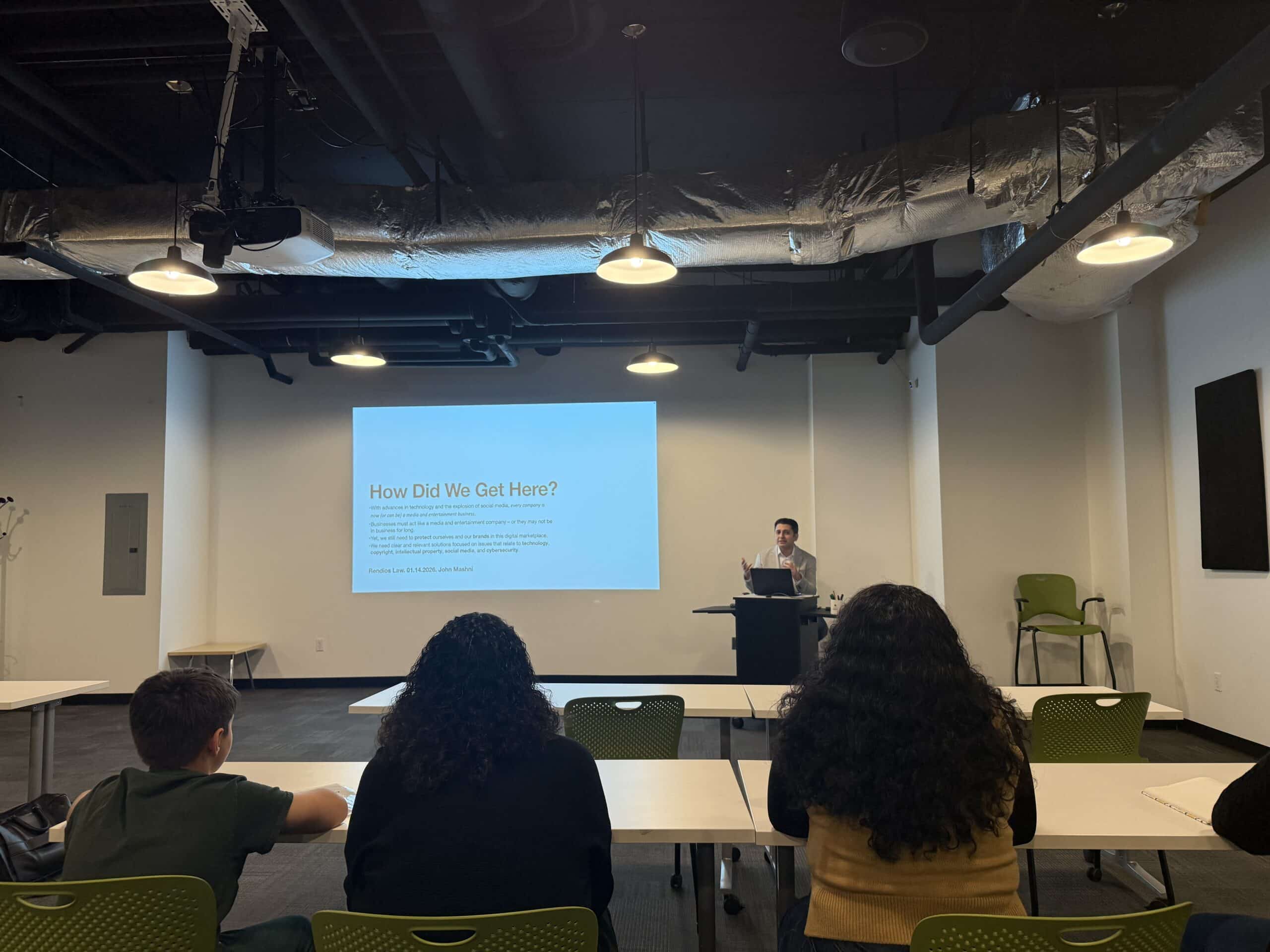
Discover key insights and practical guidance from John Mashni of Rendios Law, shared with founders at the Capital Area Startup Studio speaker series, on how to protect their brand, ideas, and intellectual property from day one.
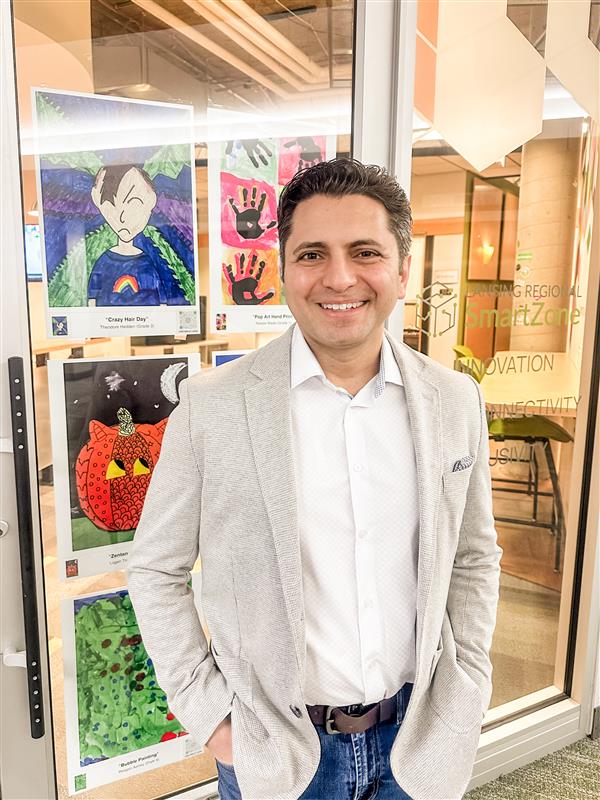
EAST LANSING, Mich.—(January 28, 2026)— Founders and builders gathered for this Capital Area Startup Studio speaker series led by John Mashni of Rendios Law for an engaging session on how to think strategically about intellectual property, branding, and legal foundations. His talk, Every Company Is a Media and Entertainment Company Even If You’re Not, reframed legal concepts through real world examples that made complex ideas both approachable and memorable.
Think Like Disney
Mashni’s central message was simple but powerful: every company should think like a media company, especially like Disney. While that may sound surprising for non-entertainment businesses, his point was how founders own, protect, and leverage their ideas and brand matters just as much as the ideas themselves.
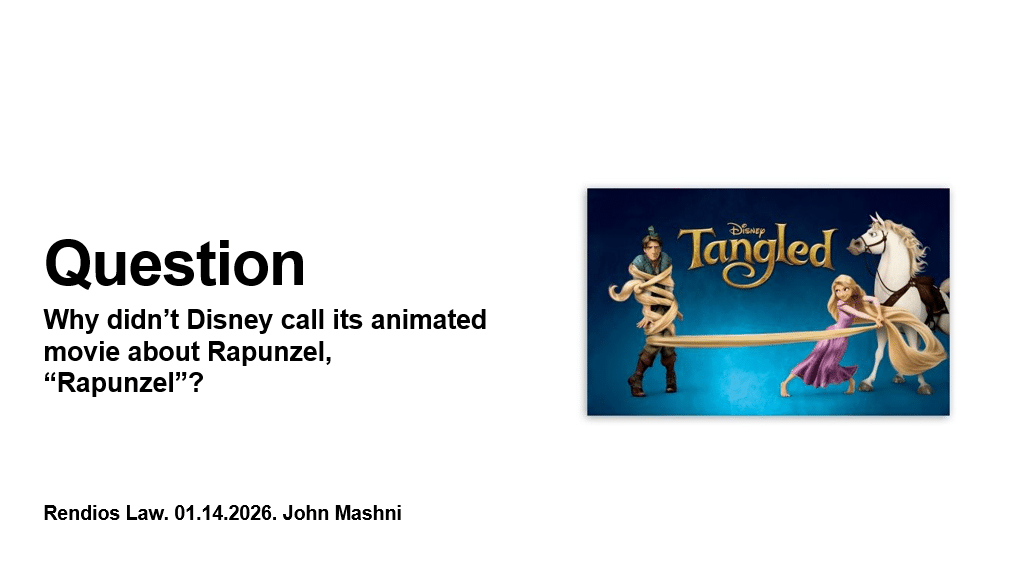
He used the example of Disney’s decision to title its animated film Tangled instead of Rapunzel. Because Rapunzel is in the public domain and available for anyone to use, Disney chose a distinct title and then built strong trademark protection around associated marks and brand elements. This gave them far more control and legal strength than relying on a public domain name. It is a strategy any founder can apply: differentiate your brand in ways that make it uniquely yours.
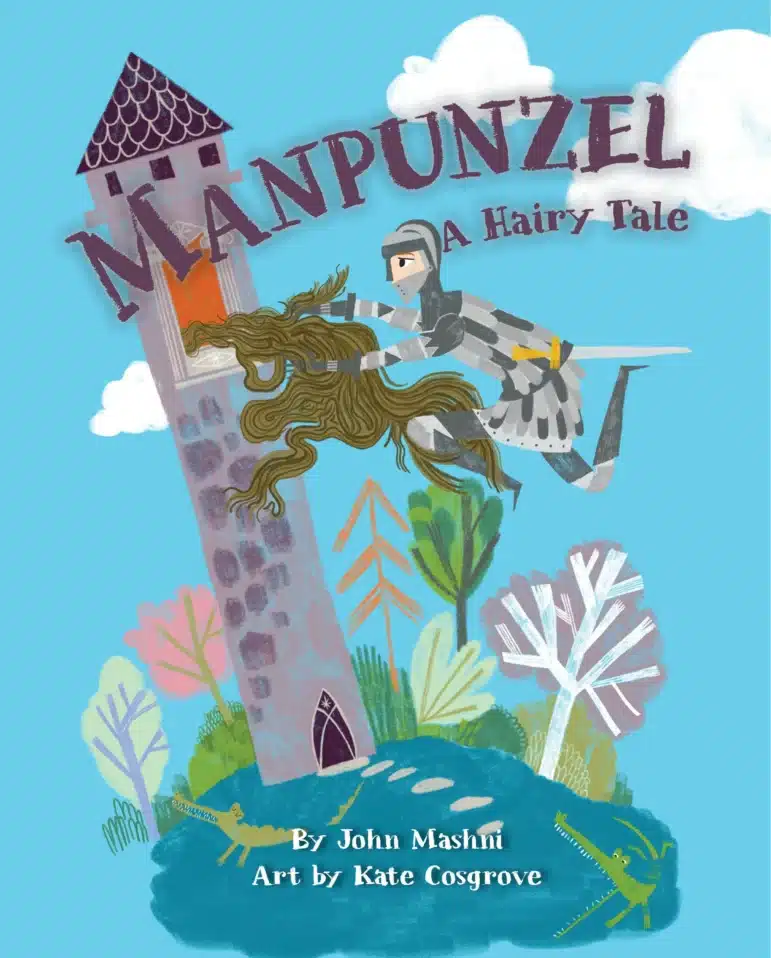
There was an extra layer of charm to this example knowing that, outside of his work as an attorney, Mashni is also a children’s book author. He has written several books, including Manpunzel: A Hairy Tale, a playful and clever spin on the classic Rapunzel story that brings the idea of reimagining familiar tales to life in a whole new way.
From Trademarks to Contracts
The session explored the difference between strong and weak brands in trademark law and what founders should think about when naming their company, product, or service. Mashni also walked through common pitfalls in contractor and freelancer agreements that can leave founders without clear ownership of logos, code, or creative work if intellectual property rights are not properly assigned.
Attendees learned how to think proactively about:
- protecting logos, names, and brand elements
- structuring agreements to ensure ownership of work created by contractors
- building legal foundations that support growth instead of creating risk
What Stuck With the Audience
What stood out most to me was how differently people in the room connected with the same ideas. One founder told me afterward that the session landed at exactly the right moment for their business and gave them a new way to think about protecting what they are building. They said they were planning to reach out to John with questions specific to their company.
On the drive home, the conversation continued in a very different way. My 10 year old came with me that night, and for the next 30 minutes we had an in depth conversation about how companies protect their ideas and names. He had not met John before, but he was already familiar with him because we have all four of his children’s books on our shelf at home. What really piqued my son’s interest, though, was John’s opening pop quiz for the audience:
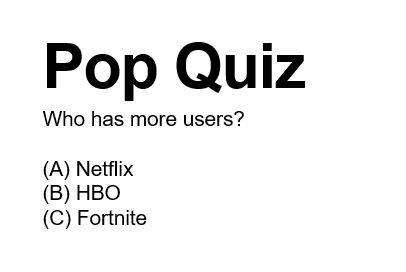
My son, who is not a regular Fortnite player but has played with his older brother before, guessed Netflix. Although he already knew about the impressive stats John shared about Fortnite, he thought Netflix would have a larger audience because it has been around longer.
Fortnite once held a Guinness World Record for having about 15.3 million people playing at the same time during a live event. But my son, ever the statistician and full of fun facts, explained, “Yeah, but Roblox is way bigger. There is this game on Roblox called Grow a Garden, and one time more than 25 million people were playing it at the same time. Not just playing Roblox, which has many games, but in the same game.”
He went on to explain how Roblox lets people make their own worlds, and when one of them gets really popular, it is like a giant digital playground that everyone wants to jump into at once.
By the time we reached our destination, he had turned a legal talk about trademarks and brand protection into a full conversation about how ideas grow, spread, and become something millions of people recognize and care about.
And honestly, knowing that the same person who helps founders to protect their ideas also writes stories that spark kids’ imaginations, I think John would have been especially proud of that connection.
What I love most is how these Capital Area Startup Studio events do not just deliver insight in the room, but keep ideas moving long after they end, creating space for connection, exploration, and the kind of curiosity that carries from founders around a table to kids in the back seat on the drive home.
About the Capital Area Startup Studio
The Capital Area Startup Studio helps founders build tech enabled businesses that strengthen our regional innovation ecosystem. The program includes:
- An incubator for a select group of founders who have been accepted into the program and receive training, guidance, and hands on support.
- A series of public events covering topics from low-code / no-code training and AI enablement to essential business skills that help small companies enable tech within their businesses and accelerate growth.
More information on the Capital Area Startup Studio can be found here.
From seed to bloom, we grow together. We are grateful for the ecosystem partners who nurture this growth:
- This session was presented by John Mashni from Rendios Law. Rendios provides strategic legal services to smart people. Their team assists in business transactions, intellectual property, tax, startups, nonprofits, and entertainment. They work with successful entrepreneurs, business owners, executives, artists, and influencers. Your goals become our goals.
- The Capital Area Startup Studio is led by Blake Grewal from Boost for ESOs and Jeff McWherter in partnership with Gravity Works Design and Development.
- The event took place in the SmartZone at the Technology Innovation Center, managed by the MSU Research Foundation and sponsored by the SmartZone.
- These events, programs, and efforts are powered by the Lansing Regional SmartZone, which supports high-tech and high-growth businesses in starting, growing, and thriving in our region.
If you believe these efforts matter, please share your support for continued SmartZone funding with your State legislators and local municipalities.
Check out the next Capital Area Startup Studio Event:
Making Your App Secure and Personalized
February 11 | 5:30 – 6:30pm | Free Registration
East Lansing Technology Innovation Center, 300 Room
A listing of all Capital Area Startup Studio events can be found here.